

Women's Rights and Devadasi System Prevention
Dedication has been banned in Karnataka since 1982. MASS works to make sure it does not return.
What the system is
In the Devadasi system, whose name means "servant of god", young girls are dedicated to the local deity, Goddess Yellamma (Renuka). The practice is most common in parts of South Maharashtra and North Karnataka. Girls are dedicated before puberty, and MASS reports that 99% come from poor Dalit families. A dedicated girl is not expected to marry and is bound to take part in certain socio-religious rituals.
Why dedications happened
Traditional beliefs and values are the main drivers, with economic factors playing a much smaller part. First-generation ex-Devadasis gave these reasons for their own dedication:
- Their parents had no son to care for them in old age.
- They or a family member had poor health, including skin diseases.
- The family had suffered crop loss or another hardship.
- The family worshipped Goddess Yellamma as its household deity (Jaga).
- The dedication was meant to bring rain and a good harvest to the village.
- They had matted hair, taken as a sign that the goddess wanted them dedicated.
Exploitation and trafficking
Local men have long sexually exploited Devadasis, and pimps and brothel keepers from cities have pressured and lured them into commercial sex work. MASS reports that about 30% of Devadasis have migrated to red-light areas in Mumbai, Goa and other cities.
Most Devadasis have a relationship with one patron, known as a "malik" or master. Some are married to their patrons, but these marriages have no legal standing, because patrons are often already married or later marry with community approval.
How the practice has changed
Early dedications in Belgaum district took place at the Yellamma temples in Saundatti and Kokatnoor. After the law against dedication, they moved to less visible village temples and private homes to avoid police action.
Many Devadasis have joined mainstream life, while a few continue covertly in commercial sex. Modern dedications are justified in other ways: childless parents vow to dedicate a first-born girl, and families without sons dedicate a daughter so she stays unmarried, earns the family's livelihood as a "son", and keeps any property within the family.
What MASS does
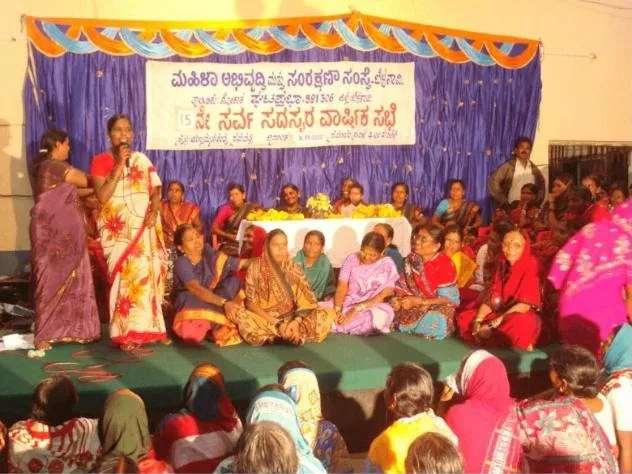
MASS works to prevent the revival of the tradition and its rituals in Belgaum district, and supports agencies working against it in nine other Devadasi-endemic districts of Karnataka. It acts collectively against Devadasi traditions, human trafficking, child marriage and violence against women and children.
Airavathi Mang
Ms. Airavathi Mang overcame her own life as a Devadasi to become a role model in her community. MASS's website describes her leading the Everychild programme to prevent Devadasi child marriages. She was invited to the UK to share her journey and her work on the MASS project, and was selected as one of EveryChild UK's 10 award winners for work with children without parental care worldwide.
Change Becomes Possible When We Stand Together.
Join the effort to build safer communities, strengthen women's rights, and create better opportunities for children.